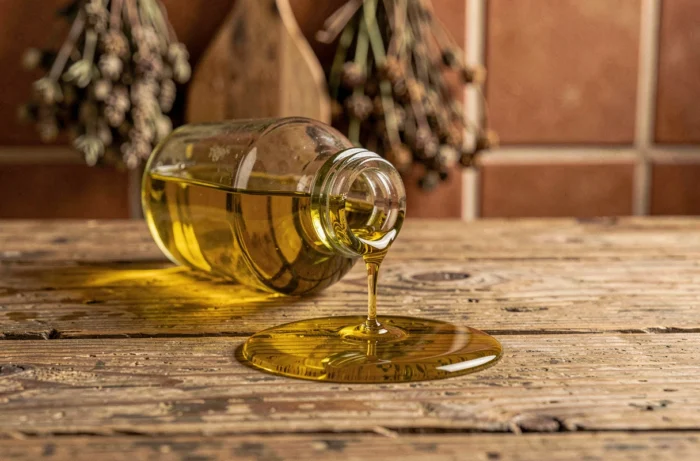
We spill a bottle of olive oil while preparing dinner, and the first reaction is not to look for a sponge. In several regions of the world, this seemingly trivial gesture triggers a series of reflexes that have nothing to do with cleaning. Spilling oil activates ancient beliefs related to the material and symbolic value of this liquid in daily life.
Spilled oil and financial pressure: the Indian perspective
In India, oil (especially mustard oil) is associated with the planet Shani, known for inflicting trials. Spilling oil is interpreted as a waste of a sacred element meant to appease this planetary influence. The announced consequences are concrete: financial pressure, sudden family conflicts, health issues affecting the head of the family or the elders.
What is interesting is not just the omen, but the codified response. The spilled oil is covered with flour, the mixture is offered to the birds, and a mustard oil lamp is lit on Saturday night. Each gesture aims to convert the bad omen into an act of charity and karmic repair.
The logic is functional: rather than passively enduring bad luck, one transforms it into an active ritual. This pattern can be found in other traditions, but rarely with this level of precision in the steps to follow.
When looking into the meaning of spilling oil, we find that each culture has developed its own repair protocols, often based on the local value of the oil used.
Italian superstitions around olive oil: bad luck and malocchio
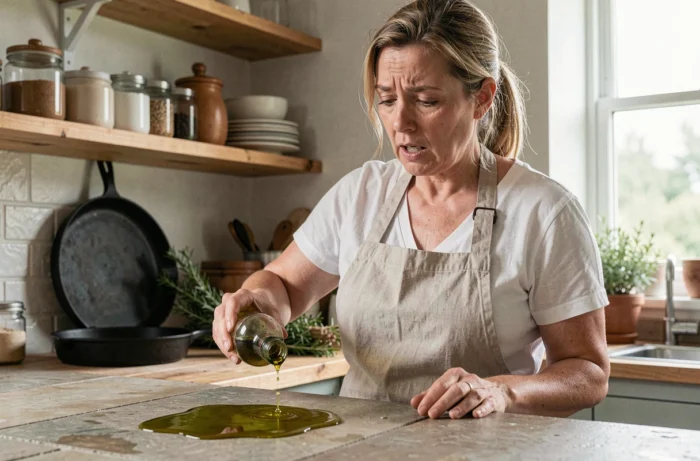
In Italy, spilling olive oil at the table is a sign of bad luck, often mentioned alongside spilling salt. The difference lies in the place of olive oil in Mediterranean culture: it is considered “liquid gold,” both food, remedy, and ritual element.
Wasting oil challenges the protection and stability of the household. It is not seen as a mere domestic accident in the minds of those who perpetuate this belief. Olive oil is linked to prosperity, health, and, in some regions of southern Italy, protection against malocchio (evil eye).
The most widespread popular remedy consists of sprinkling salt on the spilled oil before cleaning. This gesture combines a practical function (salt absorbs grease) with a symbolic neutralization of bad luck. Here we find a recurring pattern: the repair ritual borrows from the utilitarian to gain credibility.
Salt versus oil: two intersecting superstitions
Spilling salt and spilling oil share a similar economic origin. Both commodities represented considerable domestic wealth. Wasting them was akin to endangering the household.
The salt superstition (throwing a pinch over the left shoulder) is more internationally known. The oil superstition remains more entrenched in cultures where the olive tree shapes the landscape and local economy. Responses vary on this point by region: in northern Italy, the belief is less vibrant than in the south.
Spilled oil in dreams: spiritual interpretations
Oil that spills does not only appear in the kitchen. In a dream context, this scenario is interpreted as a warning signal regarding the management of one’s inner resources.
In several traditions, dreaming of spilling oil indicates that one is letting their resources go to waste without direction. Oil, in the symbolic language of dreams, represents energy, healing, and consecration. Seeing it spread on the ground suggests dispersion, a lack of channeling.
- Spilled olive oil in a dream: often associated with a period of squandered prosperity or an opportunity missed due to negligence.
- Oil that burns or ignites: a more intense reading, linked to repressed emotions or a personal transformation underway.
- Oil spilled on oneself: interpreted as an involuntary anointing, sometimes positive, signaling a spiritual protection received without seeking it.
These interpretive frameworks do not fall under clinical psychology. They are part of dream interpretation traditions (Abrahamic, Hindu, popular) where each element of daily life carries a secondary meaning.
Popular beliefs about oil: why they persist
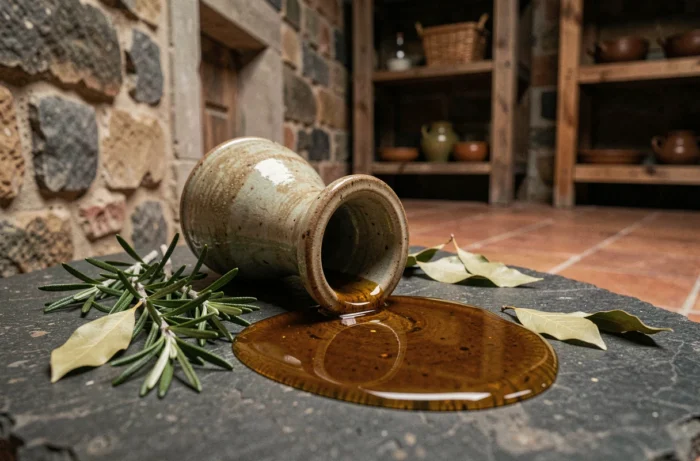
One might think that these superstitions would fade with the modernization of lifestyles. Olive oil is relatively cheaper than it was when a liter represented several days of work. Yet, the beliefs persist.
The reason lies in the social function of these superstitions. They do not solely serve to predict the future. They structure behaviors: attention to daily gestures, respect for food resources, transmission between generations.
- In Mediterranean families, warning a child that spilling oil brings bad luck remains an effective way to teach them to handle food carefully.
- In India, the repair rituals after spilling oil reinforce practices of charity and sharing with animals.
- In the context of dreams, the symbolic interpretation of oil encourages introspection about the management of one’s energy and priorities.
Superstition functions as a parallel language that encodes practical values within a symbolic narrative. Whether one believes in it or not, the mechanism remains the same: a domestic accident becomes a moment of reflection on the life of the household.
Spilled oil on the kitchen floor tells, depending on where in the world one is, a story of planets, evil eye, or wasted resources. The common thread among all these traditions is the refusal to consider this gesture as neutral. Where modernity sees a mess to clean up, popular beliefs see a message to decipher.