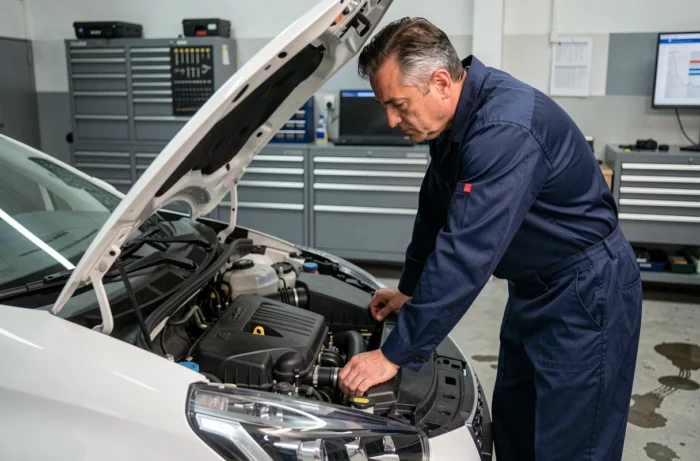
On the Peugeot 208, the wrench warning light corresponds to a maintenance indicator managed by the onboard computer. It lights up when a pre-programmed mileage threshold or duration set by the manufacturer is reached. This light does not always signal the same thing depending on the vehicle’s generation or engine type, and confusing it with an engine fault often leads to unnecessary interventions.
PureTech Belt and Maintenance Light on 208: The Link That Forums Ignore
Most articles associate the wrench light with a simple overdue oil change. On the Peugeot 208 II equipped with the 1.2 PureTech engine, the reality is more technical.
Stellantis has shortened the maintenance interval for the submerged belt of the 1.2 PureTech engines to 6 years or 100,000 km (whichever comes first), down from 10 years or 175,000 km initially. This revision of the schedule increases the likelihood that the activation of the maintenance light indicates a belt deadline, not just an oil change reminder.
When the wrench light on Peugeot 208 appears on a PureTech approaching 6 years, checking the maintenance log for the date of the last belt replacement becomes a priority. An overdue submerged belt can break and damage the engine, with repair costs far exceeding those of an oil change.
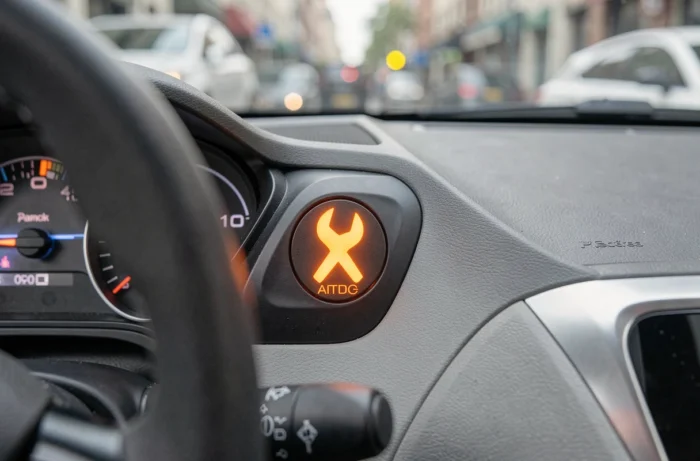
Wrench Light on First Generation 208: The Immobilizer Trap
On first-generation Peugeot 208s (2012-2018), a key-shaped light that stays on after starting or blinks may signal a completely different problem: a fault in the immobilizer related to the key’s chip.
The typical scenario: the key blade turns normally in the ignition, the doors open, but the engine stalls immediately after starting. No mechanical failure is involved. The electronic chip embedded in the key (or a poorly programmed duplicate) is simply not recognized by the computer.
Before suspecting an engine issue or forgotten maintenance, it’s essential to distinguish between two situations:
- The light briefly illuminates at ignition and then goes out: normal behavior, the system’s self-test is validated
- The light stays on or blinks after the engine starts: the key’s chip is not recognized, or a duplicate has been poorly registered in the immobilizer system
- The light is accompanied by a text message on the dashboard screen (e.g., “engine anomaly”): this likely indicates a fault detected by the OBD, to be read with a diagnostic tool
On the first generation, testing with the original key before any other intervention allows you to eliminate this cause in seconds.
Peugeot e-208 Electric: A Maintenance Light, But Not the Same Deadlines
On the electric e-208, the maintenance light still exists, but the deadlines it covers change radically. No more engine oil changes, no more timing belt, no more particulate filter.
However, the manufacturer provides for an annual check of the high-voltage battery cooling circuit and a coolant replacement every 5 years. A maintenance or high-voltage anomaly light on the e-208 refers to these specific components.
Applying thermal reflexes (checking oil, suspecting the EGR valve) on an e-208 makes no sense. The OBD diagnosis remains relevant, but the fault codes concern the high-voltage system, the onboard charger, or the battery thermal management.
Technical Inspection and Wrench Light: Should You Worry?
On a thermal Peugeot 208, the wrench light alone generally does not trigger a re-inspection during the technical inspection. It is considered a maintenance reminder as long as no safety or pollution defect is detected on the day of the inspection.
The nuance lies in the word “alone.” If the maintenance light is accompanied by a check engine light or a detectable pollution fault on the gas analyzer, a re-inspection becomes likely. The wrench light acts as a passive alert signal; it is the actual condition of the vehicle that determines the outcome of the inspection.

Resetting the Light Does Not Solve the Underlying Problem
Clearing the warning via dashboard manipulation (or with an OBD tool) without performing the corresponding maintenance only masks the alert. The internal counter resumes its countdown, and the light will illuminate again at the next threshold.
On PureTech engines, resetting the light without checking the state of the submerged belt amounts to ignoring a risk of engine failure. On the first generation, turning off the light without resolving the immobilizer fault leaves the vehicle exposed to repeated stalling.
The wrench light on the Peugeot 208 has the merit of being explicit: something awaits intervention. Identifying which one, depending on the generation, engine type, and mileage of the vehicle, remains the only approach that truly protects the engine and the wallet.