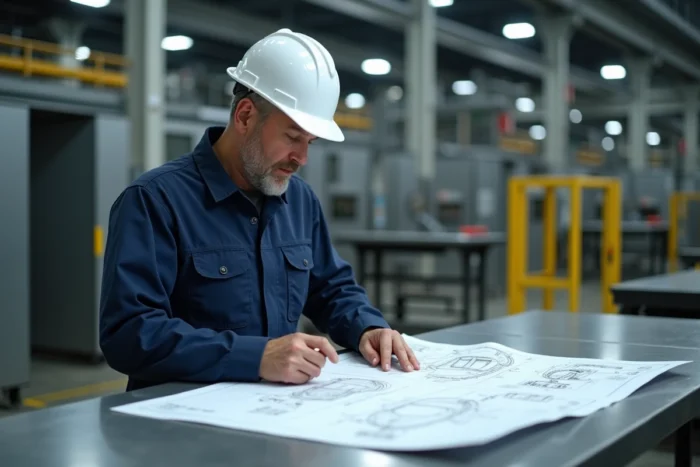
On an automotive parts assembly line, a visual quality control station slows down the entire pace. The operator manually checks each batch, the cycle time explodes, and downstream non-quality generates costly waste. No off-the-shelf equipment solves this bottleneck because the geometry of the parts is unique to this site. This is exactly the type of situation where custom industrial solutions become the only realistic optimization lever for a production process under constraint.
Custom Special Machines: Unlocking Performance When Standards Plateau
We often encounter the same pattern in workshops: a line runs smoothly at most stations, but one or two bottlenecks concentrate the stops, restarts, and loss of pace. The classic reflex is to adjust the existing equipment differently or add a complementary module. When that is no longer sufficient, the question of a special machine arises.
Manufacturers turn to specifically designed equipment when no standard material allows them to achieve cadence, precision, or reliability goals. Complex assembly, integrated inline quality control, high-speed operations: these use cases justify custom development. Players like mtm-france.com design these types of solutions tailored to the specific constraints of a site or product.
The gain is not limited to speed. A well-designed special machine also reduces manual interventions between two steps, which decreases the risk of error and downtime. In high-speed environments, this is often the only way to eliminate a bottleneck without redesigning the entire line.
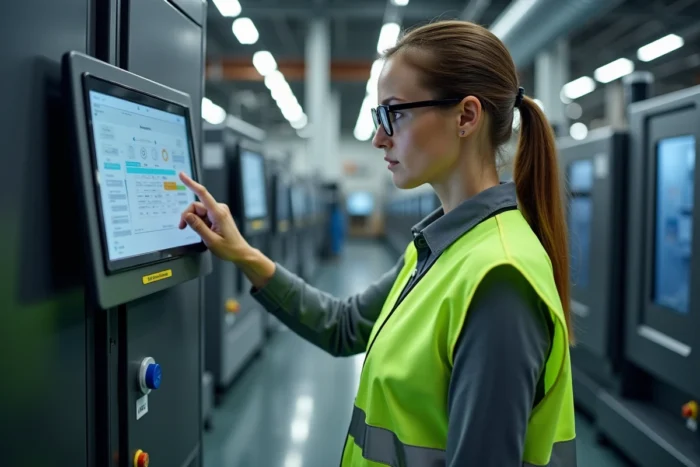
Custom Production Management Software: Managing Atypical Processes
On the software side, a symmetrical problem is observed. Market ERP and MRP systems cover standard flows well, but as soon as a process deviates from the norm (multi-material manufacturing, heavy regulatory traceability, very constrained scheduling), generic modules show their limits.
A custom production management software models the actual flows of the workshop, not a theoretical diagram. Specifically, this means that business rules, complex bill of materials, and site-specific planning constraints are natively integrated, without makeshift parameter adjustments.
What a Custom Tool Changes on a Daily Basis
- Production data is reported in real-time to a dashboard designed for operators and workshop managers, not just for management.
- Scheduling takes into account specific constraints (machine availability, operator skills, material lots) instead of applying a generic FIFO logic.
- Quality alerts are triggered based on thresholds defined by the actual process, reducing false positives and speeding up reactions in case of deviations.
Feedback varies on this point, but several industrial SMEs find that switching to a custom tool significantly improves the reliability of their planning compared to a standard-configured ERP.
Production Data Analysis: Identifying Invisible Losses
Having sensors and software is useless if no one exploits the collected data. Many sites still exist where information is available (cycle times, scrap rates, energy consumption) but remains in Excel files or unconnected databases.
Optimization begins with the centralization and cross-analysis of production data. Cross-referencing the scrap rate with machine parameters at a specific station, for example, allows for identifying a thermal drift that causes non-conformities at the end of the day. This type of correlation remains invisible as long as the data is siloed.
Three Analysis Angles to Prioritize
Rather than measuring everything, time is saved by focusing on indicators that have a direct impact on process performance:
- The actual cycle time per station, compared to the theoretical time, to spot micro-stops that go unnoticed in daily reports.
- The overall equipment effectiveness (OEE) calculated by team and by product, not just as a global monthly average.
- Energy consumption per produced part, an increasingly monitored indicator to control manufacturing costs.
A fine analysis of this data guides investment decisions. If the OEE consistently drops at a given station with a specific product, it is a clear signal to consider a custom solution (machine or tooling) rather than yet another adjustment.
Continuous Improvement and Production Processes: Anchoring Gains Over Time
Optimizing a process without a follow-up mechanism is like patching a leak without checking the pressure upstream. The gains achieved after the installation of a special machine or the deployment of suitable software degrade quickly if the organization does not plan for a feedback loop.
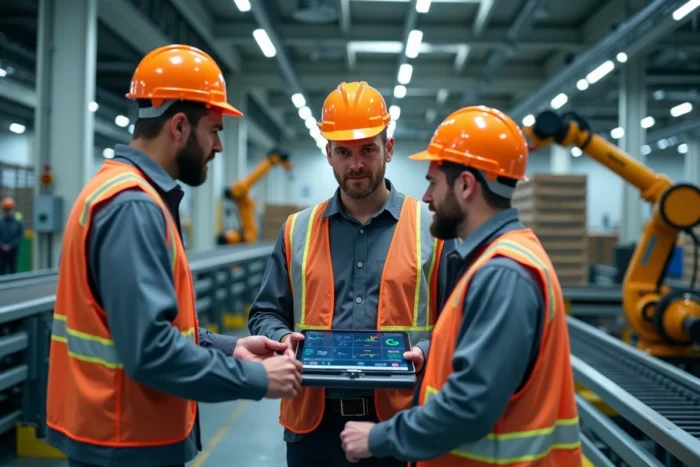
On the ground, successful continuous improvement initiatives share a common point: they involve operators in reporting problems and validating solutions. A visible tracking board in the workshop, updated daily, has more impact than a monthly report sent by email to management.
The versatility of teams also plays a direct role. An operator trained on multiple stations can more easily detect an anomaly because they understand the normal functioning of each step. This on-site diagnostic capability complements automated data analysis and accelerates incident resolution.
Optimizing a production process has no finish line. Each improvement alters the balance of the line, which can shift the bottleneck to another station. Staying attentive to these shifts, relying on reliable data and field feedback, is what distinguishes a site that progresses from one that stagnates after a successful initial project.