
The English time system divides the day into two blocks of twelve hours, while the French counts from 0 to 23. This peculiarity poses no problem as long as one stays within their own language.
The troubles begin when it comes to booking a flight, confirming a business appointment abroad, or simply reading a schedule written in English. AM and PM are two ubiquitous Latin abbreviations in the English-speaking world, but their logic hides some traps that most introductory guides overlook.
PM does not only refer to a time: other meanings in common English
Even before discussing times, one point deserves to be made. In contemporary English, PM is also the abbreviation for prime minister and project manager. Meanwhile, AM is sometimes used to refer to an account manager in a professional context.
A French-speaking learner reading the British press or a company email may come across “the PM announced” with no relation to the afternoon. Context usually clarifies the ambiguity, but this polysemy is absent from almost all French-speaking introductory guides. Keeping this double meaning in mind avoids awkward misunderstandings as soon as one reaches an intermediate reading level.
To delve deeper into the meaning of am and pm in a strictly temporal context, one must return to the Latin etymology and the concrete functioning of the 12-hour format.
Ante meridiem and post meridiem: Latin origin of the 12-hour format
AM comes from the Latin ante meridiem, which means “before midday.” PM comes from post meridiem, “after midday.” The meridian in question is the moment when the sun reaches its highest point, that is, solar noon.
This division dates back to Roman sundials. The day was divided into hours of light and hours of night, with noon serving as a natural pivot. The system has endured through the centuries because it corresponds to a reality observable by anyone, without complex measuring instruments.

The 12-hour format remains the standard in the daily life of most English-speaking countries. In contrast, the 24-hour format dominates official documents, transportation, and computer systems, including in the United States and the United Kingdom. This coexistence of the two formats explains why confusion persists among French speakers: depending on the medium read (plane ticket, email, phone clock), the format changes without warning.
Reading and writing time with AM and PM: the concrete mechanics
The principle can be summed up in one sentence: AM covers from midnight to 11:59 AM, PM covers from noon to 11:59 PM. All morning hours are marked AM, while all afternoon and evening hours are marked PM.
Correspondences between 12-hour format and 24-hour format
| 12h Format | 24h Format | Time of Day |
|---|---|---|
| 12:00 AM | 00:00 | Midnight |
| 6:00 AM | 06:00 | Morning |
| 12:00 PM | 12:00 | Noon |
| 3:00 PM | 15:00 | Afternoon |
| 9:00 PM | 21:00 | Evening |
| 11:59 PM | 23:59 | End of Day |
To convert a PM hour into 24-hour format, you add 12 to the displayed number (except for 12 PM, which remains 12:00). For an AM hour, the number stays the same, except for 12 AM which becomes 00:00.
Common formulations in English
In spoken English, “past” is often used for minutes after the hour and “to” for minutes before the next hour. Here are some practical references:
- “Half past seven” refers to 7:30, whether in the morning or evening. It is the context or the explicit addition of AM/PM that clarifies any doubt.
- “Quarter to nine” means 8:45. In a professional context, one specifies “quarter to nine PM” to avoid any ambiguity.
- “It’s noon” and “it’s midnight” effectively replace “12 PM” and “12 AM” in conversation, and this practice is recommended in professional emails.
The trap of 12 AM and 12 PM: why noon and midnight are preferable
This is the most documented point of confusion. 12 AM corresponds to midnight and 12 PM corresponds to noon, which contradicts the intuition of many French speakers. The logic is, however, coherent: 12:00 AM starts the AM cycle (morning hours), while 12:00 PM starts the PM cycle (afternoon hours).
This subtlety regularly causes errors in bookings, invitations, and schedules shared between teams in different time zones. Recent resources dedicated to making appointments in English recommend systematically replacing 12 AM and 12 PM with midnight and noon in emails and professional invitations. This precaution removes any ambiguity without burdening the sentence.
The 24-hour format is gaining ground, even in English-speaking countries
Introductory articles often present the 12-hour format as “the English system” in contrast to the “French system.” The reality is more nuanced. In military, medical, aviation, and computer contexts, the 24-hour format is the standard worldwide, including in the United States.
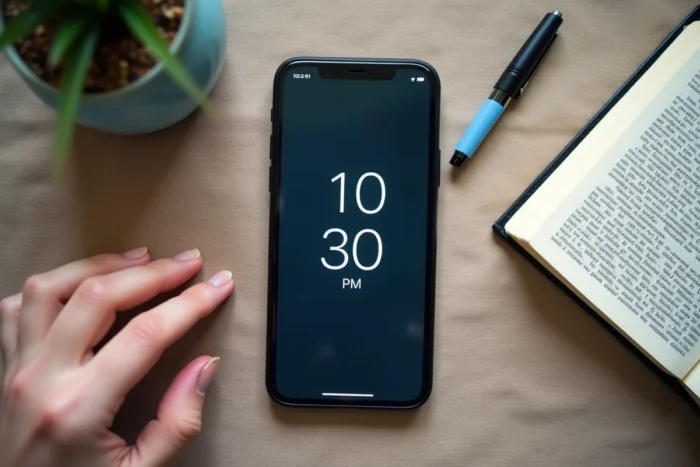
Digital interfaces are accelerating this trend. Most operating systems offer the 24-hour format by default or as an option, and many English-speaking users adopt it on their phones to avoid alarm errors related to AM/PM. The 12-hour format remains dominant in spoken conversation and mainstream media, but its monopoly is eroding in written and technical usages.
For a French speaker learning English, this evolution has a concrete consequence: mastering AM and PM remains essential for understanding spoken language and informal exchanges. Relying on the 24-hour format in one’s own written communications reduces the risk of error. Mixing the two systems in the same document, however, creates more confusion than either one resolves in isolation.
The distinction between AM/PM seems simple on paper. It becomes truly so when one incorporates edge cases (noon, midnight) and chooses the right format according to the context. In a professional email, writing “noon” instead of “12 PM” or switching to the 24-hour format remains the most reliable method to ensure no one misinterprets the twelve hours.