
A port carrier is a service provider that handles, stores, and transports goods within a port area or between a port and its final destination. The choice of this operator directly affects delivery times, freight security, and regulatory compliance throughout the logistics chain. Selecting the right partner requires checking specific technical criteria, far beyond just the displayed rate.
Compliance with the 2026 Port Security Reform in France
France has profoundly reorganized security in ports with the creation of departmental port security referents and a revamp of access controls, inspection-filtering, and video surveillance. The new provisions of the Transport Code came into effect on July 17, 2026.
For a shipper, this reform creates an immediate selection filter: a port operator that has not updated its security plan presents a direct risk. Operators of controlled access port areas have four months from July 17, 2026, to submit an updated security plan to the prefect. Working with a provider that is behind on this obligation exposes you to freight blockages and increased inspections.
Before signing a contract, ask your port carrier for a copy of its updated security plan or, failing that, a deposit certificate with the prefecture. A reliable operator anticipates these deadlines rather than suffering from them. To explore freight solutions via SDN Rennes, this verification is a good starting point in your pre-selection process.
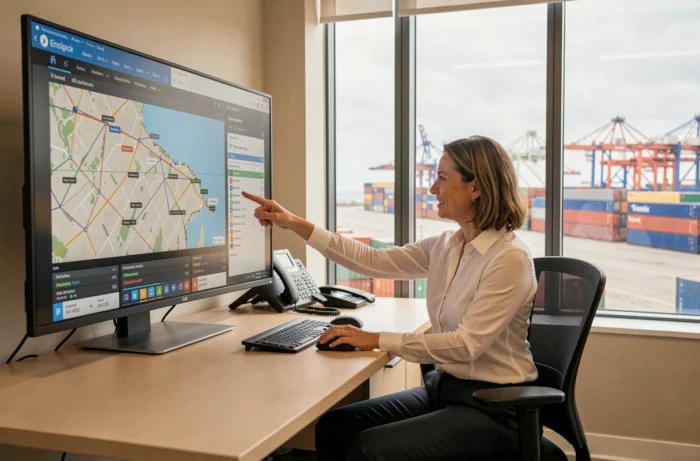
Security Exercises and Reporting: Concrete Indicators of Reliability
The revamped regulatory framework imposes measurable operational obligations. Security exercises must be organized at least once a year, and a biannual report on the implementation of the security plan must be submitted to the competent authorities.
These obligations represent a verification tool for the client. A port carrier capable of presenting its exercise reports and semi-annual assessments demonstrates a structured operation. Conversely, the absence of these documents often indicates a careless approach to security, which impacts the punctuality and traceability of shipments.
Documents to Request During a Supplier Audit
- The latest security exercise report, including the date and scope of the exercise conducted
- The semi-annual report submitted to the prefect, certifying the compliance of the security plan
- Certifications or approvals specific to the type of goods transported (hazardous materials, temperature-controlled containers)
- Insurance policies covering the carrier’s liability in the port area
This documentary approach allows for comparing providers on factual bases, not on commercial promises.
Integration Capacity in Your Logistics Chain
A port carrier never works alone. It interacts with the freight forwarder, customs broker, shipowner, and sometimes directly with final distribution services. The compatibility of information systems between your organization and the port provider determines the overall fluidity.
Check if the operator offers real-time tracking of containers and goods in the port area. The ability to transmit EDI (Electronic Data Interchange) data or connect to your TMS (Transport Management System) avoids manual re-entries, which are sources of errors and delays.
Geographical Coverage and Modes of Transport
A provider located at only one port forces you to multiply contacts if your flows pass through several maritime fronts. Assess the actual coverage of the carrier: number of ports served in France, partnerships with international operators, access to complementary modes of transport (rail, river, road).
A multimodal operator reduces the number of intermediaries and simplifies the management of responsibilities in case of disputes. Air, sea, or rail freight does not involve the same constraints in terms of time or cost: the carrier must be able to guide you to the mode suitable for each shipment.

Port Pricing: What the Quote Doesn’t Always Show
The price displayed by a port carrier reflects only part of the actual cost. Fuel surcharges (BAF), container demurrage fees, local port taxes, and customs clearance costs are systematically added to the base rate.
Request a detailed quote item by item. Demurrage fees can exceed the cost of transport itself if unloading or customs clearance delays occur. A reliable carrier incorporates these risks into its proposal and specifies the free time conditions (number of free days at the terminal before billing).
- Ask for the tariff schedule for demurrage and storage fees applied by the terminal
- Check if the BAF is indexed to a public index or unilaterally set by the provider
- Identify the costs related to customs operations: does the carrier cover them or subcontract them to a third party?
- Clarify the insurance conditions: ad valorem or flat coverage, potential deductibles
Compare Based on Total Cost
Two port carriers displaying the same handling rate can generate very different final invoices. The only way to compare: reconstruct the total cost of a typical shipment, from the loading dock to delivery at the warehouse, including all ancillary fees. Ask each provider to estimate an identical scenario on a route you regularly use.
The choice of a port carrier relies on verifying its regulatory compliance, the transparency of its pricing, and its ability to integrate into your existing logistics chain. The port security reform that came into effect in July 2026 adds an additional selection criterion: only operators that have updated their security plan on time offer a guarantee of operational continuity.