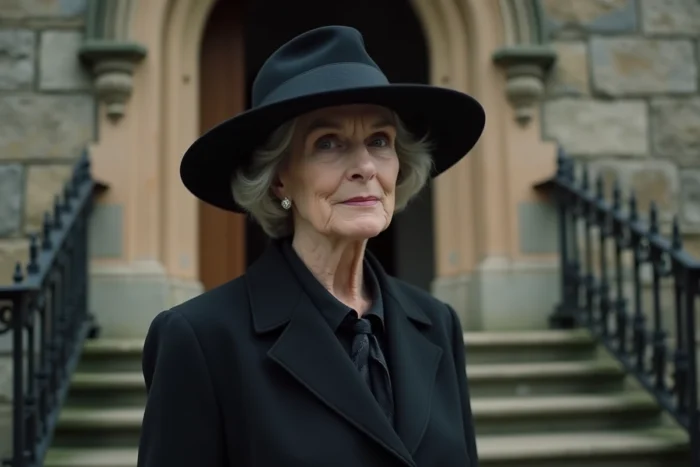
The hat remains one of the few clothing accessories capable of transforming a sober outfit into a visible gesture of respect. At a funeral, wearing it requires a precise balance between tradition, religious context, and practical common sense. If chosen poorly or removed incorrectly, it draws attention for the wrong reasons.
Funeral Hat: What the Fabric and Color Signal to Others
Even before the shape or style, it is the material of the hat that speaks. A matte felt, a sober fabric without shine: that is what is appropriate. Shiny, satin, or brightly patterned materials should be avoided, including in Asian cultures where recent dress guides emphasize the prohibition of shiny textures and visible ornaments.
The color follows the same logic as the rest of the outfit. Black remains the safest choice. Navy blue, anthracite gray, or dark purple are also acceptable, as these shades are associated with mourning in Western tradition. Any other color risks standing out, even unintentionally.
For women, a short-brimmed hat or a discreet fascinator with a possible short veil corresponds to classic customs. For men, a flat-brimmed felt hat or a sober city hat works well. In both cases, it is important to follow the rules outlined on Actu Mode to assess the appropriate styles for each ceremony context.
A often overlooked point: the hat must be proportionate to the silhouette. A model that is too large on a slender person draws attention. A model that is too small perched on the head gives an impression of disguise. The idea is to remain discreet.
Removing Your Hat at a Ceremony: When and Where Exactly
Have you ever wondered when exactly to remove your hat during a funeral ceremony? The answer depends on the location and type of funeral.
In a Place of Worship
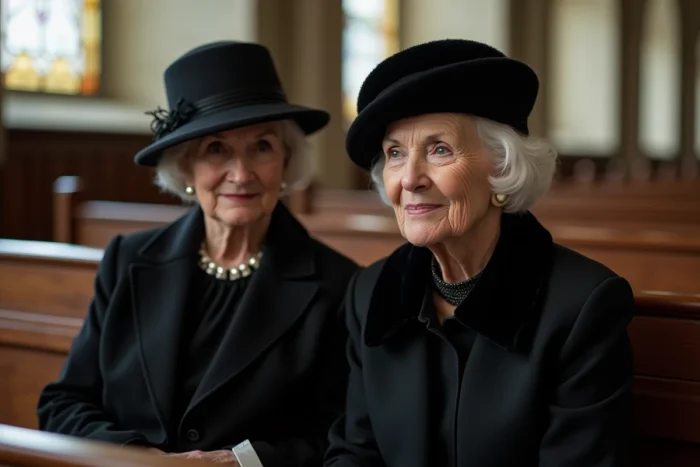
In a Catholic or Protestant church, men remove their hats upon entering. This is an old rule still in effect. Women, on the other hand, can traditionally keep theirs on throughout the ceremony, including a fascinator or a hat with a veil.
The situation reverses in a synagogue: wearing a head covering (kippah for men) is mandatory. A sober men’s hat can replace it. In Jewish funerals, the guiding principle is absolute humility. Any accessory perceived as ostentatious, including hats, would be contrary to the spirit of the rite.
In a mosque, customs vary by community. Check with the deceased’s family before the ceremony.
Outdoors, at the Cemetery
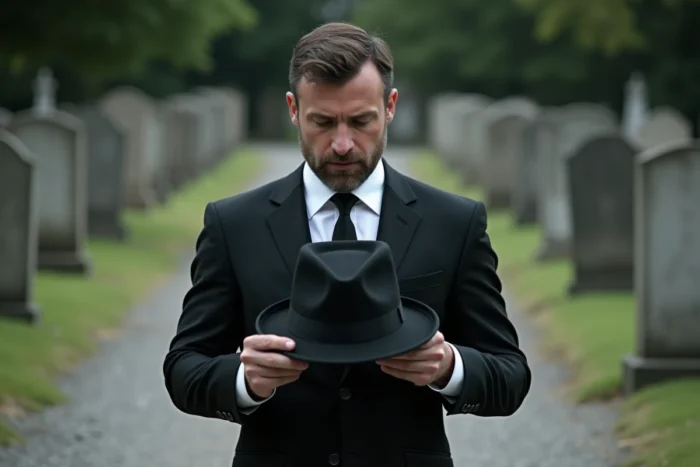
The most common rule at the cemetery: men uncover their heads at the time of burial or during tribute speeches. Women generally keep their hats on. Holding your hat in hand during the tribute is a recognized gesture of respect.
In heavy rain or intense sun, keeping a sober head covering is accepted for practical reasons. Recent recommendations in France normalize the use of a discreet hat outdoors when the weather demands it, provided that the overall outfit remains sober.
Civil or Secular Funerals: More Flexible Codes but Not Absent
Civil ceremonies, which are becoming increasingly common, do not follow the same prescriptions as a religious service. There are no liturgical rules regarding head coverings. The norm then relies on common sense and respect for the grieving family.
Specifically, here is what applies in most civil funerals:
- A discreet and dark hat is always well received, especially for women, for whom this accessory remains associated with a form of sober elegance in a mourning context.
- Men prefer to remove their hats during speeches or moments of reflection, even outdoors.
- Baseball caps, sports beanies, or brightly colored straw hats should be avoided, regardless of the season. The accessory must be consistent with a mourning outfit.
Adapting the Mourning Hat to the Season and Your Health
Wearing a hat at a funeral is not just a matter of etiquette. It is also a practical choice, sometimes medical.
In winter, a medium-brim felt hat protects against the cold during long standing periods at the cemetery. In summer, a light and matte hat prevents heatstroke. In both cases, the sobriety of the model takes precedence over visible functionality. A technical hiking hat, even in black, has no place here.
For individuals undergoing medical treatment that causes hair loss, the mourning hat serves a dual function of comfort and dignity. No one questions this choice. Both relatives and other attendees fully understand this situation.
Common Mistakes to Avoid with a Funeral Hat
Some missteps occur regularly, even among those attentive to propriety:
- Keeping a wide-brimmed hat in a covered space where it obstructs the view of people sitting behind. Prefer a compact model for indoors.
- Choosing a model with a brightly colored ribbon or decorative feathers. The ornament draws the eye and distracts from the ceremony.
- Nervously handling your hat during speeches. If you remove it, hold it calmly against you, brim up.
- Placing the hat on the coffin, flowers, or liturgical furniture. It should be held in hand or on the lap.
The mourning hat does not need to be an expensive or sophisticated accessory. A sober, well-fitted model removed at the right moment is enough to show the respect due to the deceased and their loved ones. The gesture matters more than the price of the accessory.