The success of a homemade recipe does not depend on the number of ingredients or the complexity of the presentation. It relies on precise technical choices, often overlooked by mainstream content: mastery of cooking, management of storage temperatures, and selection of raw materials based on their thermal behavior.
Oven Cooking: Calibration Mistakes That Ruin Your Dishes
Most home ovens have a temperature discrepancy between the displayed setting and the actual heat inside the chamber. This discrepancy, which can reach several dozen degrees, alone explains why a pie burns on the surface while remaining raw in the center, or why a casserole lacks tenderness.
We recommend using an independent oven thermometer, placed on the middle rack, to check the actual temperature before baking. Recalibrating your oven radically changes the consistency of results. It’s a minimal investment that transforms every oven recipe into a predictable outcome.
For long cooking (braises, gratins, casseroles), the position of the rack is as important as the temperature. A casserole placed too high captures direct radiation from the ceiling and dries out the surface. Positioned in the lower third, it benefits from enveloping heat that promotes tenderness.
Among the cooking articles on Mon Blog Cuisine, several address these setting details that make the difference between a decent meal and a truly refined dish.
Food Storage and Safety: What Changes for Home Cooking
European regulations on Listeria monocytogenes in ready-to-eat food products are tightening. The criterion of absence of Listeria in 25 g now applies at all stages of marketing, unless the operator demonstrates that the threshold of 100 cfu/g will not be exceeded at the end of the shelf life.
For the amateur cook, the direct consequence affects refrigerated products used daily: deli meats, fresh cheeses, and store-bought prepared dishes. Expiration dates may evolve, and storage conditions become a significant safety lever.
Cold Management in Your Refrigerator
- Check your refrigerator’s temperature with a dedicated thermometer. The coldest zone should be between 0 and 4 °C for sensitive products (meats, fish, fresh dairy products).
- Never store a still-warm casserole directly in the refrigerator. Wait for the temperature to drop below the warmth threshold (perceptible to the touch on the container’s wall) before closing the door.
- Always separate raw products from cooked products, even in the vegetable drawers. Cross-contamination on a fresh tomato salad ruins the sanitary quality of the entire meal.
Well-managed domestic cold protects as much as cooking. Too many homemade recipes fail not due to preparation, but due to the storage of leftovers or the preservation of ingredients before assembly.
Food Packaging and PFAS: Choosing Your Cooking Containers
European regulations on PFAS in food packaging introduce strict thresholds. Control is based on the measurement of total fluorine: below 50 mg/kg, the packaging is compliant. Beyond that, regulatory thresholds set a maximum of 25 ppb for an individual PFAS and 250 ppb for the sum of PFAS.
In home cooking, this development directly concerns baking paper, cardboard molds, and certain steam cooking bags. Food-grade silicone molds and enameled cast iron or ceramic dishes remain the safest alternatives for oven cooking, with no risk of chemical migration to food.
Which Containers to Favor for Your Oven Recipes
The enameled cast iron dish withstands all domestic oven temperatures and goes from the fire to the table without transfer. For a pie, an uncoated metal mold (steel or tin) offers better thermal conduction than a silicone mold, promoting a crispy bottom.
A good cooking container improves the result as much as a good recipe. Investing in two or three durable pieces (cast iron casserole, ceramic gratin dish, metal pie mold) covers almost all needs for a varied weekly menu.
Vegetarian Meals and Flavor Balance: The Texture Approach
The classic pitfall of homemade vegetarian dishes is textural monotony. A vegetable gratin without crunchy contrast becomes tiresome after three bites. The key lies in layering textures within a single dish: a melting base, a crunchy element, a creamy sauce.
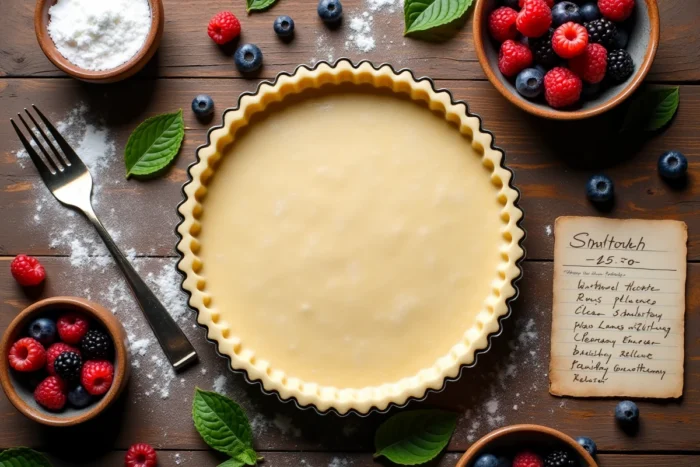
Take a tomato pie recipe. A pre-baked shortcrust base, slowly roasted tomatoes to concentrate their flavor, then a topping of grilled herb breadcrumbs added in the last minutes of cooking. Three distinct textures in a single dish transform a simple meal into a complete menu.
The same principle applies to a vegetable casserole. Add toasted seeds or homemade croutons at the time of serving. Long cooking in a casserole produces tenderness, while the crunchy counterpoint provides the gustatory interest often lacking in improvised vegetarian recipes.
Seasoning at the End of Cooking
We observe that most amateur cooks season at the beginning of preparation and then do not revisit it. At the end of cooking, taste and systematically adjust the acidity (a drizzle of lemon, a spoonful of vinegar) and salt. The final seasoning elevates a dish from “correct” to “memorable.”
Homemade cooking gains reliability when we stop treating it as a series of mechanical steps. Each recipe relies on physical parameters (temperature, time, texture) and equipment choices that determine the outcome well before the fork hits the plate. Mastering these fundamentals makes every meal reproducible, from Tuesday night’s casserole to Sunday’s chocolate pie.