
A real estate project in Belgium relies on three technical pillars: borrowing capacity, the choice of property type, and the energy compliance of the targeted housing. These three elements determine the final profitability much more than location alone.
PEB Certificate and Energy Renovation: The Filter to Apply Before Any Visit
The PEB certificate (Energy Performance of Buildings) is a mandatory document for any sale or rental in Belgium. The energy class must appear in every listing, whether it comes from an agency or an individual. Sanctions are provided for non-compliance with this obligation.
This certificate is not just an administrative formality. It directly conditions the total budget of the project. A property rated F or G in Wallonia or Brussels implies energy renovation work in the short term, as regional obligations are gradually tightening.
Buyers who only check the price per square meter without examining the PEB class risk underestimating the real acquisition cost. A well-rated apartment (A or B) at a slightly higher price may turn out to be cheaper than an old poorly insulated house once the renovation costs are factored in.
Before each visit, requiring the PEB certificate and estimating the cost of compliance helps eliminate properties that would undermine profitability. On immolabel.be, listings display the energy information of properties, making this preliminary sorting easier.
Apartment or House in Belgium: A Choice That Affects Resale
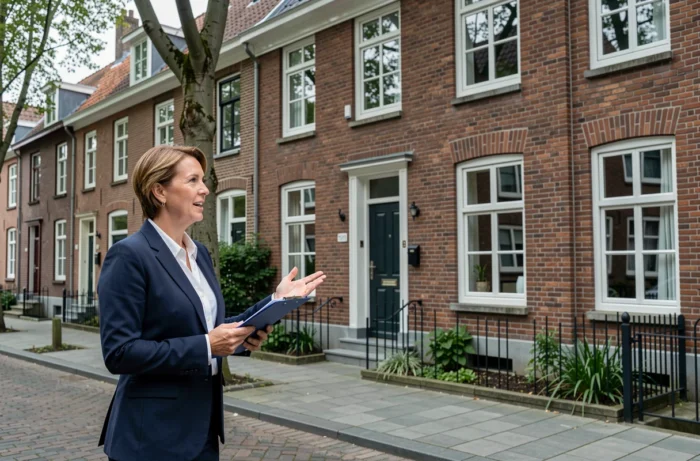
The Belgian market has shown a clear trend for several quarters: apartments outperform houses in sales volume and price progression. Terraced houses, in particular, even show a slight downward trend.
This observation changes the game for a real estate project oriented towards rental investment or medium-term resale. Betting on a 4-facade house remains relevant for a long-term residential purchase, but the rental yield of well-located apartments (Brussels, Liège, major university cities) offers a better ratio between invested capital and generated income.
Selection Criteria According to Property Type
- For an apartment: check the condominium fees, the reserve fund, and the works voted in the general assembly, as these items can significantly reduce net profitability
- For a house: estimate the cost of PEB compliance and the property tax, which varies by region and cadastral income
- For a property to renovate: ensure that regional energy renovation obligations (Wallonia, Brussels) are compatible with the available budget, under penalty of sanctions or resale blockage
Registration Fees and Notary Fees: The Item Buyers Underestimate
In Belgium, registration fees represent the heaviest item after the property price. In Brussels and Wallonia, the standard rate reaches 12.5% of the purchase price. In Flanders, the regime differs with possible reductions under certain conditions.
Notary fees are added to this amount. The notary is freely chosen by the buyer, and their fees are regulated by the state. They generally represent a modest fraction of the purchase price, but combined with the registration fees, the total amount of ancillary costs can reach a significant portion of the overall budget.
Incorporating these fees right from the calculation of borrowing capacity avoids unpleasant surprises at the time of the sales agreement. Too many buyers set their maximum budget based solely on the property price, only to discover that the fees absorb their entire personal contribution.
Property Tax: A Recurring Charge Not to Be Overlooked
The property tax is an annual tax calculated on the cadastral income of the property. Its amount varies by municipality and region. For a rental investment, this charge directly reduces net yield. Before signing, asking the notary or the municipality for the exact amount of the property tax allows for a more accurate profitability calculation.

Net Rental Yield in Belgium: Realistic Calculation and Common Pitfalls
The gross yield of a rental property does not reflect the financial reality of the project. The net yield is calculated after deducting all expenses: property tax, non-recoverable condominium fees, insurance, maintenance, vacancy periods, and any PEB compliance work.
A property advertised with an attractive gross yield may fall to a disappointing level once these items are deducted. Apartments in major Belgian cities offer sustained rental demand (expats, students, European officials in Brussels), which limits the risk of vacancy. In Wallonia, lower acquisition prices allow for better monthly cash flow, but rental demand may be more irregular depending on the municipalities.
- Always calculate the yield after deducting property tax, fees, and insurance
- Plan for a realistic vacancy rate, even in tight areas
- Check the PEB class of the property: an energy-intensive home increases costs for the tenant and reduces market attractiveness
The Belgian real estate market in 2026 is characterized by a normalization phase after the marked increases of 2025. Prices remain upward-oriented, but the pace has significantly slowed. This period favors buyers who take the time to analyze each cost item rather than those who rush to the first property that fits their apparent budget.