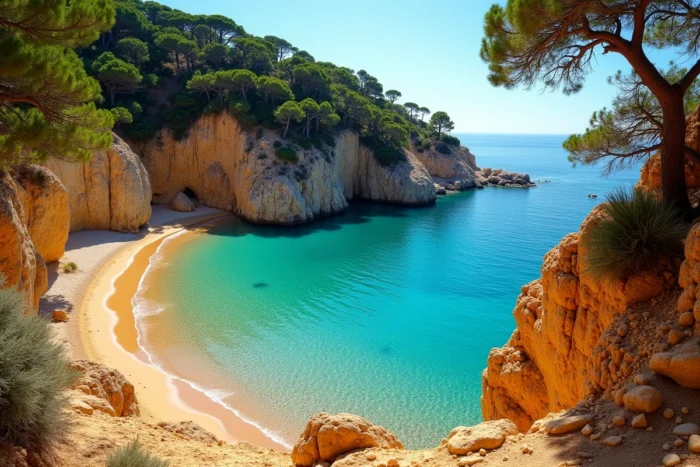
Reaching Cala Tavallera means first accepting to walk. No paved road, no parking by the water, no beach bar to order a granizado. This cove in the Cap de Creus natural park, in the municipality of El Port de la Selva, naturally filters its visitors by the effort it demands.
You find yourself facing a stretch of beach made up of stones, gravel, and coarse sand, about 135 meters long, wedged between cliffs that the wind has sculpted over centuries. It’s the kind of place where you regret not filling your water bottle before leaving.
Soil Composition and Actual Configuration of Cala Tavallera
Most articles talk about “golden sand” or “pebbles.” The reality is more nuanced. The beach is primarily made up of stones, gravel, and coarse sand. This composition changes the game for anyone planning to spend half a day there.
The swimming area is relatively narrow. You can’t just lay your towel anywhere, especially in July and August when a handful of hikers and kayakers converge in the same spot. Bringing a thick ground mat or a thick beach mat makes the difference between a comfortable afternoon and a torment on the rocks.
The waters are clear, with visibility that allows you to spot the rocky bottom from the surface. For those wanting to try snorkeling, the submerged rock formations on the sides of the cove offer the best observation spots. The center, on the other hand, is relatively flat and less interesting underwater.
Those wishing to discover Cala Tavallera in Spain would do well to check the marine weather before committing to the trail, as the tramontane can turn this sheltered cove into a windy trap in a matter of hours.
GR-11 Trail to Cala Tavallera: What Hiking Really Involves
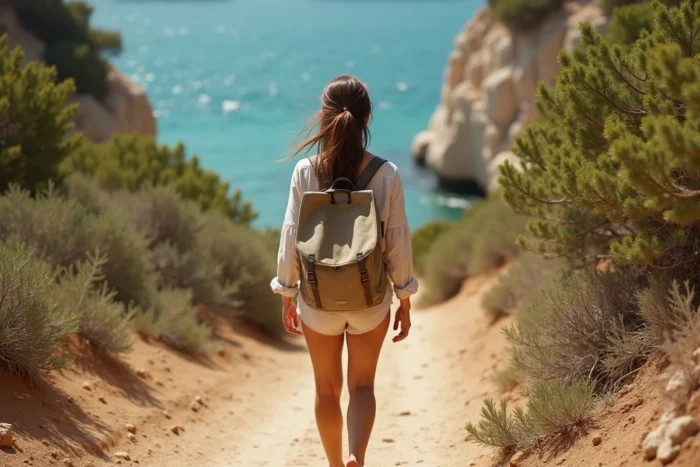
The pedestrian access passes through sections of the GR-11, which have been increasingly well-marked in recent years. The starting point is El Port de la Selva, a fishing village in the north of the Costa Brava, in the Alt Empordà region.
The trail is not technical, but it is exposed to the sun for almost the entire route. No shade, no water point, no shortcut. You walk on rocky terrain with slight elevation changes, all within a landscape of sparse Mediterranean vegetation.
Here are some concrete tips to prepare for the outing:
- Leave early in the morning (before 9 AM in summer) to avoid the heat on the return trip, when the sun is directly overhead
- Bring at least two liters of water per person, more if you plan to stay several hours on the beach
- Wear low hiking shoes with a non-slip sole, not flip-flops or open sandals
- Bring plenty of sunscreen, as the reflection off the light rocks amplifies exposure
The other option is by boat. From El Port de la Selva, some rental companies offer unlicensed boats to reach the cove by sea. Returns vary depending on the season and availability, but it’s an alternative that allows you to save your legs for snorkeling.
Cap de Creus Natural Park: Constraints and Expected Behaviors
Cala Tavallera is located in the Cap de Creus natural park, which implies specific rules. No camping, no fires, and no littering. There are no trash bins on site.
This protected status explains the complete absence of infrastructure. No showers, no toilets, no first aid station. When you go there, you are self-sufficient from start to finish. This is also why the cove retains its wild character, in contrast to the developed beaches further south on the Costa Brava, towards Begur or Calella de Palafrugell.
Taking all your waste back is not a recommendation, it’s an obligation in the park. Plastic bags, cigarette butts, and food scraps left by careless visitors pose a recurring problem on the isolated coves of Catalonia. On a 135-meter-long beach, even the smallest piece of litter stands out.
Snorkeling and Underwater Life in the Cove
The underwater ecosystem directly benefits from this protection. The submerged rocks are home to typical fauna of the northwestern Mediterranean. Schools of small fish are easily spotted in the shallow areas, and the rocky sides of the cove concentrate biological activity.
A mask, snorkel, and water shoes are sufficient. No wetsuit is needed between June and September, as the water temperature is pleasant. The best spots are against the lateral rock walls, where algae and crevices create micro-habitats.
El Port de la Selva: The Starting Village to Know
You can’t talk about Cala Tavallera without mentioning El Port de la Selva. This fishing port is the logical starting point for the hike. The village has a few restaurants, a small supermarket for supplies, and a handful of accommodations.
Shopping the day before in El Port de la Selva avoids unpleasant surprises. Once on the trail, you won’t encounter any shops. The village maintains a calm atmosphere, far from the tourist hustle of the more famous resorts on the Costa Brava.
For those exploring the region over several days, the nearby coves accessible from the same network of trails allow for varied experiences without needing to get back in the car. Cap de Creus concentrates some of the most preserved beaches in Catalonia within a limited area, provided you have the stamina to reach them.