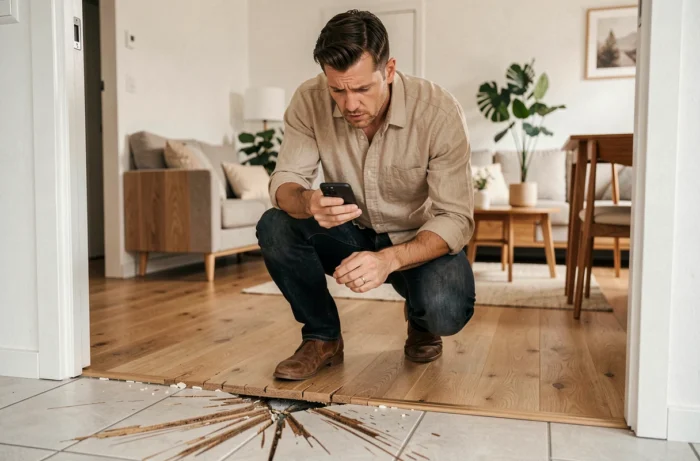
A broken glass, a stain on the sofa, a door ripped from its hinges: damages in short-term rentals do not give warning. The reflex of most Airbnb hosts is to contact the guest via message to find a solution. It’s a good start, but the platform imposes a specific process to obtain a refund. Missing a step or exceeding a deadline is enough to lose all recourse, even with solid evidence.
Acceptable evidence for an Airbnb damage claim: what has changed
Since the update of Airbnb’s Host Damage Protection Terms that came into effect on April 20, 2026, the rules of evidence have become significantly stricter. The platform now requires what it calls “legitimate and verifiable evidence,” with explicit exclusions.
First point: photos generated or edited by AI are inadmissible, even for light editing (algorithmic cropping, advanced automatic brightness correction). Airbnb uses its own detection tools. A modified image can lead to immediate rejection of the claim.
Second point: smoke odors. A simple testimony or a photo of an ashtray is no longer sufficient. A report or invoice from a professional deodorization service must be provided for the request to be considered.
Third point: linens. Stains considered “ordinary” (related to normal and authorized use) are increasingly less compensated. A coffee stain on a white sheet, for example, risks being classified as normal wear and tear.
Last point: consumables. The update introduces a specific definition that encompasses welcome products and cleaning supplies. In practical terms, requests for replenishment of soap or toilet paper are now inadmissible.
Understanding damage management on Airbnb requires mastering these new requirements even before opening a dispute.
Deadlines and steps to charge a guest via the Resolution Center
You noticed damage after a guest’s departure. What to do, and in what order? The process relies on a sequence of strict deadlines.
Direct request to the guest
The host must send a refund request via the Resolution Center. This initial submission must occur within 14 days of check-out, or before the arrival of the next guest if they arrive sooner. The guest then has 24 hours to accept, decline, or propose a different amount.
Escalation to AirCover
If the guest refuses or does not respond within 24 hours, the host can request Airbnb’s intervention. The platform will then review the submitted evidence. The expected elements are specific:
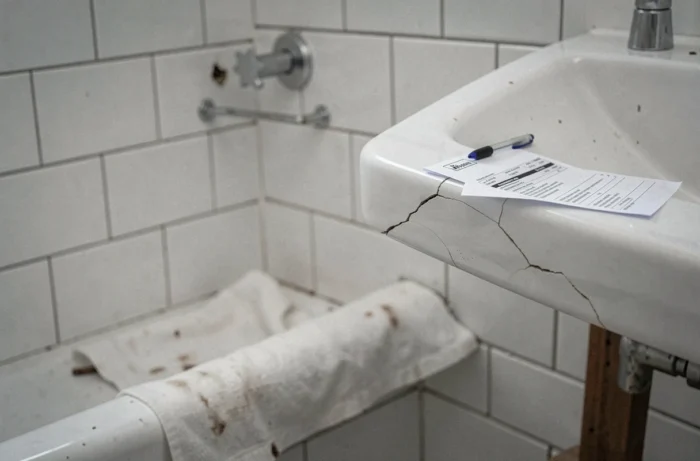
- Date-stamped photos of the damage, taken before and after the stay (the check-in condition report is a key piece of the file)
- Invoices or repair quotes from a professional, not a simple personal estimate
- Messages exchanged with the guest via Airbnb messaging (exchanges outside the platform are not considered)
- For missing items, proof of purchase or a photo of the item in place before the stay
All exchanges must go through Airbnb’s integrated messaging to be enforceable. A text message or phone call does not constitute valid evidence in the procedure.
AirCover for hosts: real coverage and concrete limits
AirCover is presented by Airbnb as a damage guarantee that can reimburse up to 3 million US dollars. This amount is impressive, but the scope deserves to be detailed.
What is actually covered
The guarantee covers damages caused by guests (or their companions) to the property, furniture, personal belongings, and even vehicles parked on the property. Additional cleaning costs are also included, particularly for damages caused by permitted pets.
What is excluded from protection
AirCover does not replace non-occupant homeowner insurance (PNO). Several cases remain outside the scope:
- Normal wear and tear of the property and furniture, even if accelerated by a high turnover of guests
- Damages caused by a pre-existing maintenance issue (a leak that started before the stay, for example)
- Loss of income related to the unavailability of the property during repairs
- Disputes over amounts deemed too low by the platform, for which Airbnb may refuse to intervene
AirCover complements insurance; it does not replace it. A host who relies solely on Airbnb’s guarantee exposes themselves to significant coverage gaps, particularly regarding rental loss.
Inventory and preventive documentation: upstream protection
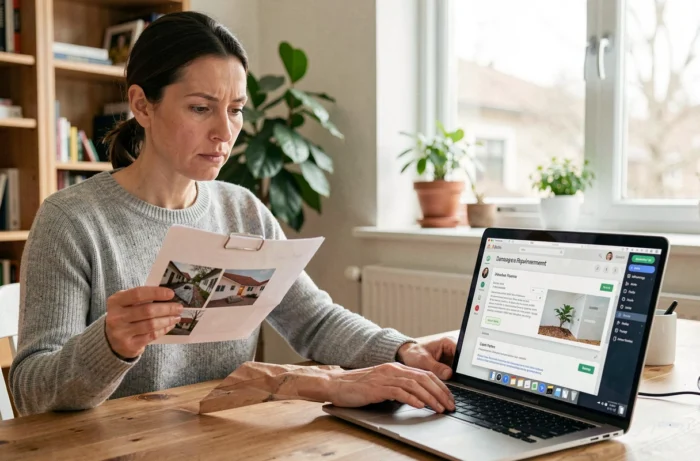
The majority of claims rejected by Airbnb are due to a lack of “pre-stay” evidence. The issue does not stem from the damage itself, but from the inability to prove that the property was in good condition before the guest’s arrival.
The most reliable method is to systematically photograph each room, each fragile item, and each sensitive surface between bookings. Date-stamped photos before each check-in form the foundation of an admissible claim. Some hosts film a complete walkthrough of the property on video with the date visible on the phone screen.
Keeping purchase invoices for furniture and equipment also helps justify the value of damaged items. Without proof of purchase, Airbnb applies a depreciation that can significantly reduce the reimbursement granted.
On the liability side, French legal framework requires the tenant (even for short-term rentals) to return the property in the condition in which they found it. But in practice, it is up to the host to prove the degradation. The evidence file is not an option; it is the condition for the procedure to succeed.
Well-documented damage is often resolved right at the direct request to the guest, without escalation. Poorly documented damage, even serious, can remain entirely the owner’s responsibility.